
If you stay long enough in a residential area in Goa, morning will begin with a sound. A rhythmic horn of a bicycle cutting through quiet. If you follow it, you’ll find a man on a bicycle, with a large basket balanced behind him. Inside it lies Goa’s daily ritual, its breads.
He is the poder, the traditional bread seller, arriving each morning with fresh loaves from the bakery. Someone every household waits for.

Poi Bread in Goa: A Breakfast Staple
The most famous of all the breads in Goa is Poi. It’s roundish bread with a grainy texture and an airy pocket in the middle. For most Goans, their day starts with Poi. In most local cafes, you will find a combination with Poi for breakfast.

Patal bhaji with poi is the go-to breakfast dish in Goa. The patal bhaji is a subtly spiced curry made with white peas and coconut. For a coastal state known for its non-vegetarian fare, it’s quietly surprising that one of its most loved breakfasts is entirely vegan. It’s a comforting start for the day.
The other variations that are available are potato bhaji, mixed bhaji, or usal. The rule is simple. Try it at a small restaurant which looks packed, that will have the best ones. You can try poi with a different dish every morning and the day will be happy and light.
Poi became a part of the Goan’s life through the Portuguese colonisation of Goa. When they arrived in Goa, which was a rice eating region, they missed their home bread. So, they introduced it and made it with toddy as a natural fermenting agent. And there came into existence the unique bread of Goa – the Poi.
Today, most bakeries use yeast, but the form remains the same.

Katre Pao and the Craft of Goan Bakers
Another distinctive bread is Katre Pao. It gets its name from the Konkani word Kator which means scissors, a reference to how the dough is cut before baking. When the dough rises in the oven, it opens up and gives it a butterfly or bowlike shape.
Though the Portuguese bought bread to Goa, it’s the Goan bakers or poders who created a distinct identity for different types of bread by giving it a distinct shape.

Godd Pao: A Sweet Side of Goan Bread
Then there is Godd Pao. Mildly sweet, soft, and almost the size of a plate, it sits somewhere between bread and indulgence.
It’s a good accompaniment for the evening tea. One is often enough for a family or just one person, depending on the day.

The Many Types of Goan Breads
The variety doesn’t end there. There is revda, shaped like a snail. Kadak pao, with a firm crust. Ladi pao, the familiar bread that finds its way into vada pav. And kakonn, round and ring-like.
Each one distinct. Each one recognisable at a glance.

The People Behind Traditional Goan Bakeries
Some accounts suggest that when the Portuguese wanted to train locals in bread-making, they called all communities to take part and the Kshatriya community made the best one, so they were selected.
They continued making bread and over time, this became tradition, a lineage. And the poder, its most visible keeper.
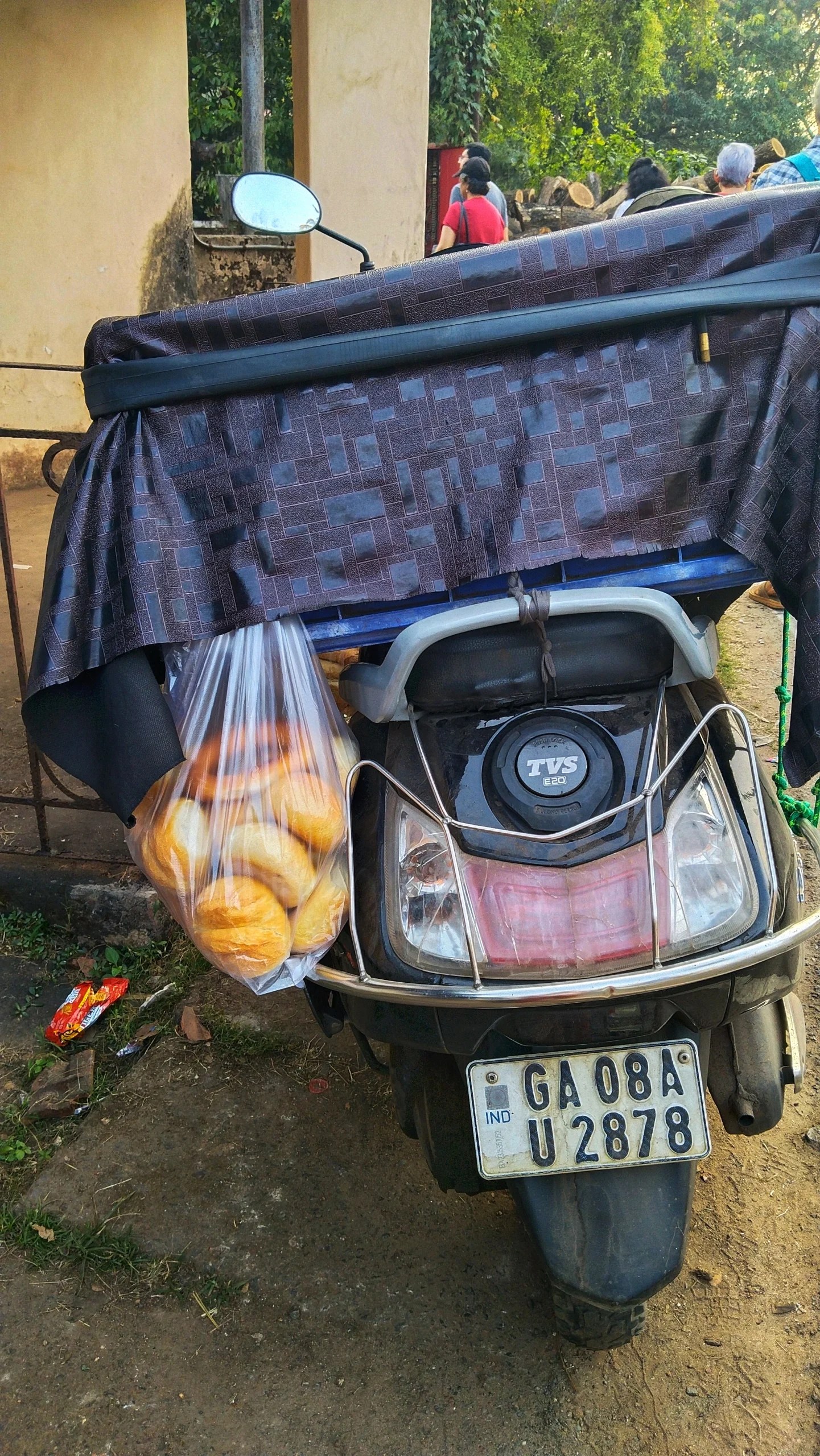

The Poi, The Pao, The Culture
To look at Goa through its bread is to see its history of exchange. What arrived from elsewhere was adapted, reshaped, and made locally.
A poi is not just an accompaniment. It holds within it a story of migration, adaptation, and everyday life. And every morning, that story returns. On a bicycle, announced by a horn, waiting to be brought home.
