The burst of red, orange and yellow autumn hues is the first thing that caught my eyes at the Tenryu-ji temple premises. I had come to taste the Shojin ryori vegan cuisine, which was served at the Shigetsu restaurant inside the temple premises. But I got caught in the beauty of the Zen Garden around it. The autumn trees accompanied by a peaceful pond in front of it and the Arashiyama mountains standing tall behind it were picture-perfect from all sides.

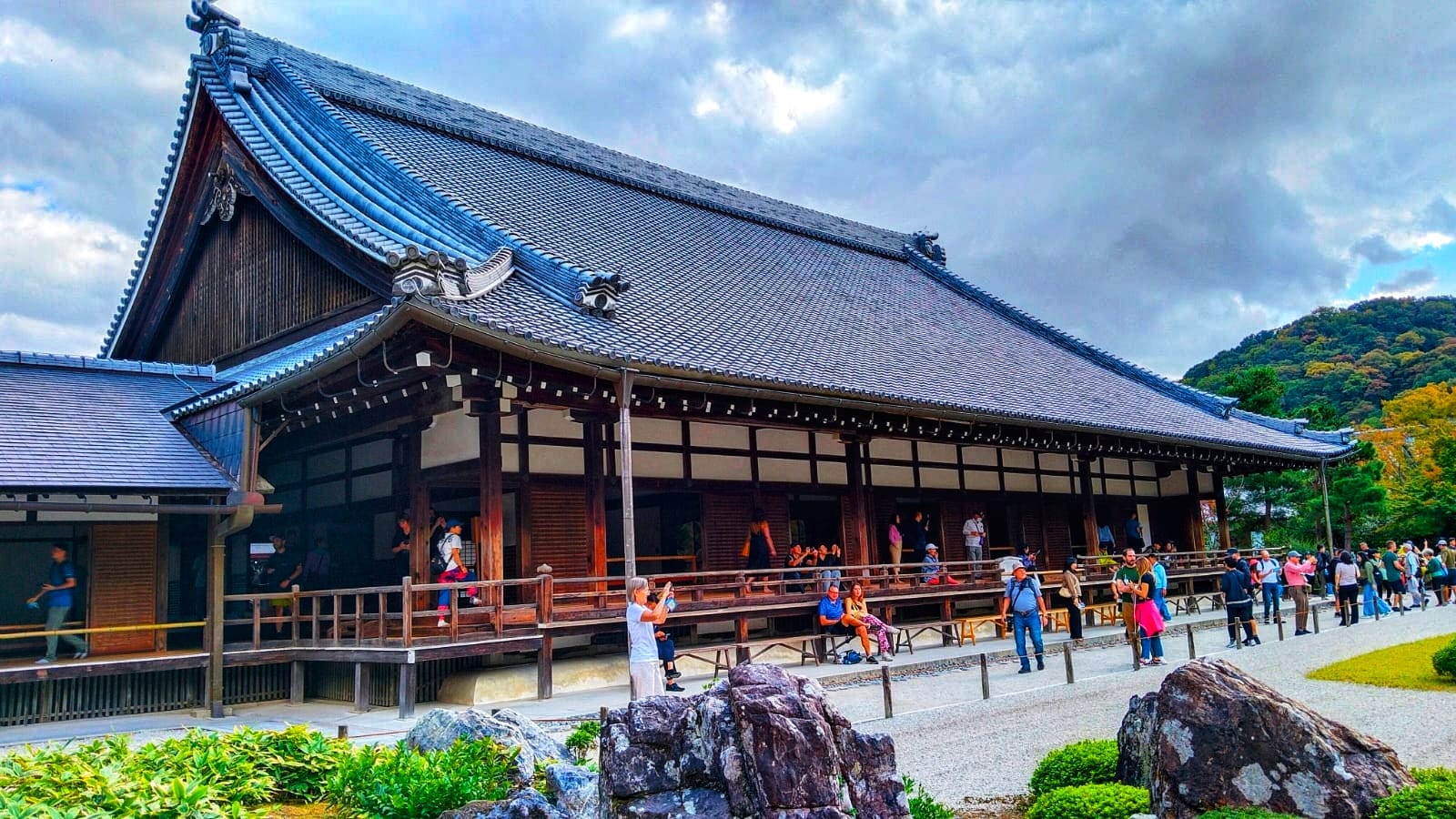
The beep on my phone reminded me that I had to head towards the restaurant. They have fixed time slots and limited number of seats available each day, so I had booked online in advance as I didn’t want to miss this vegan dining experience in Kyoto.
On route to Shigetsu


As I headed to the Shigetsu restaurant, I noticed that the pathway was created in an equally serene style. My mind was calm, but my stomach was hungry as I had skipped breakfast to make sure that I could eat all the Buddhist vegan dishes that was served to me. Sustainability is a big part of the Shojin Ryori cuisine, and every part of the ingredient is used to avoid waste, and I wanted to make sure that I didn’t waste anything too.
Shojin Ryori & the Roots of Vegan Food in Japan
Shojin ryori is the traditional food of the Buddhist monks in Japan. The name shojin ryori roughly translates to devotional cuisine. It reflects its origins, coming from China to Japan, as a practice of mindfulness and respect for nature.
It is a culinary tradition based on the foundation of simplicity, seasonal ingredients and sticking to vegetarian or vegan principles and abstaining from any form of animal products. The preparation and consumption of the food is considered as a spiritual practice. So, I was intrigued and looking forward to it.

By the time I reached the entrance of the restaurant, I had left the crowd behind, and my mind felt light and eager amongst the green surroundings. The entrance had pieces of cloth hanging vertically called noren with Japanese text on it, which typically is the name of the restaurant. Noren though used for functional purpose, like all things in Japan is a showcase of their art form of calligraphy, design, and elegance.
At Shigetsu Restaurant – Finally!
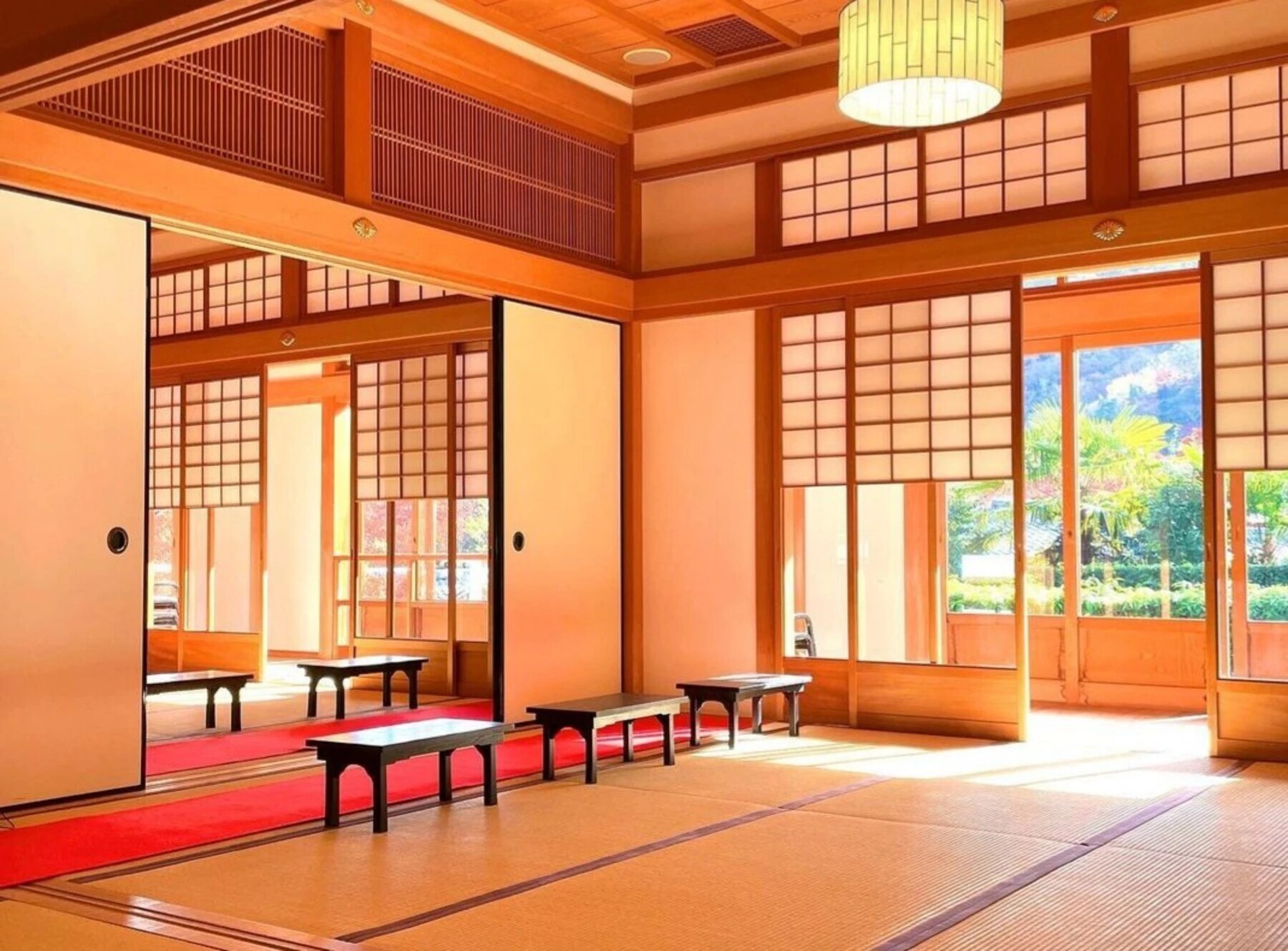
Inside I was welcomed at the reception, asked to remove my shoes in one corner, wash my hands and then taken inside to the dining area.
It was the traditional seating on the floor with low tables. There were couples and families in the surrounding dining areas. The host explained to me that the dining area was also surrounded by Zen gardens, the entire atmosphere was quiet, and the focus was only on the food.
Shojin Ryori – A Feast for the Eyes
The host then brought me a tray with different bowls of food which was covered, each concealing its own little secret. When I opened it, steam from it drifted with the slight wind and the different flavours made its way to my nose and I was instantly intrigued and excited.
It had rice, soup and five side dishes served in bright red bowls. Each bowl was beautifully plated and looked like a piece of art. I carefully admired each bowl before I could savour it.

The Shojin ryori cuisine is based on the five principles of balance. Five tastes – salty, sour, bitter, umami and sweet. Five cooking methods that include raw, boiling, steaming, frying, and grilling. And the use of five colours which is the first thing that catches your attention.
While the focus of using these principles is to create a nutritional balance, it is also designed to appeal to the five senses.
An Intriguing Feast for the Taste Buds
Unsure where to start, I first tasted the soup and then tasted a bit of everything to understand the flavours.

One dish that instantly stood out for my flavourful Indian palate was the goma-dofu or a chilled sesame tofu served along with wasabi.
My Favourite Goma-Dofu
The silky, creamy sesame tofu, delicately topped with a hint of wasabi, delivered an explosion of flavours that danced across my palate. Its smooth texture melted effortlessly in my mouth and the subtle nuttiness of the sesame perfectly balanced by the sharp, fiery kick of the wasabi was the highlight of dish. I savoured each bite deliberately, letting the intricate flavours linger, prolonging the joy of this exquisite dish which I was eating for the first time in my life.
I then mixed the steamed vegetables with rice and took a sip of the soup so that all the flavours nicely mixed up. It had a mild soy flavour to it.
I broke a piece of the fried potato dumpling and swirled it in the miso paste and relished the deep umami flavour that it let out. I waited for the taste to completely settle and then tasted the pickled vegetable; it was a bit crunchy and gave me a satisfying bite of sourness.
Graatitude & Mindfulness
As I savoured each bite, I felt a profound sense of gratitude—not just for the food, but for the beauty in simplicity it reminded me of.
I kept mixing and matching each dish, till I finished eating each dish. Tasting each dish, relishing each flavour and different styles of cooking and trying to figure out what I was eating, made me realise that I was eating with a lot more awareness than I usually do back home. Shojin ryori demanded my presence, grounding me in the here and now.
The serene atmosphere also seemed to seep into the meal itself. It was a reminder of the interconnectedness of everything around us, something we so easily miss in our everyday busy city life.
And then I finally picked the piece of fruit, which was given as dessert, its natural sweetness brought the meal to a gentle close and gave me a deep sense of contentment.

Only when you finish the meal you realise that there is a lot of thought that goes into creating this perfect blend of different dishes with different flavours which beautifully complements each other.
I was happy that I had googled vegan guide to Japan and stumbled upon this elegant cuisine. If you are in Japan, you should definitely try this shojin ryori vegan food, doesn’t matter if you are vegan or not, as it is the wholesome experience that stays with you for a long time after.
Must-try vegan food in Kyoto
Kyoto, with over a thousand temples, is one of the best places to experience Shojin ryori. But you will also find it in other major cities like Tokyo and Osaka too. But if you are in Kyoto then I would highly recommend visiting Shigetsu.
There are restaurants that serve this vegan cuisine too. But to fully experience the Shojin ryori cuisine which is also known as the food for spiritual practice—one has to experience it in the original setting, inside a temple, surrounded by the Zen Garden and eat it without any distractions.
Try it. Happy eating!
P.S. Check out more of my Japan stories here
– Unforgettable Japan: Insights from a solo female traveller

2 Comments Add yours